
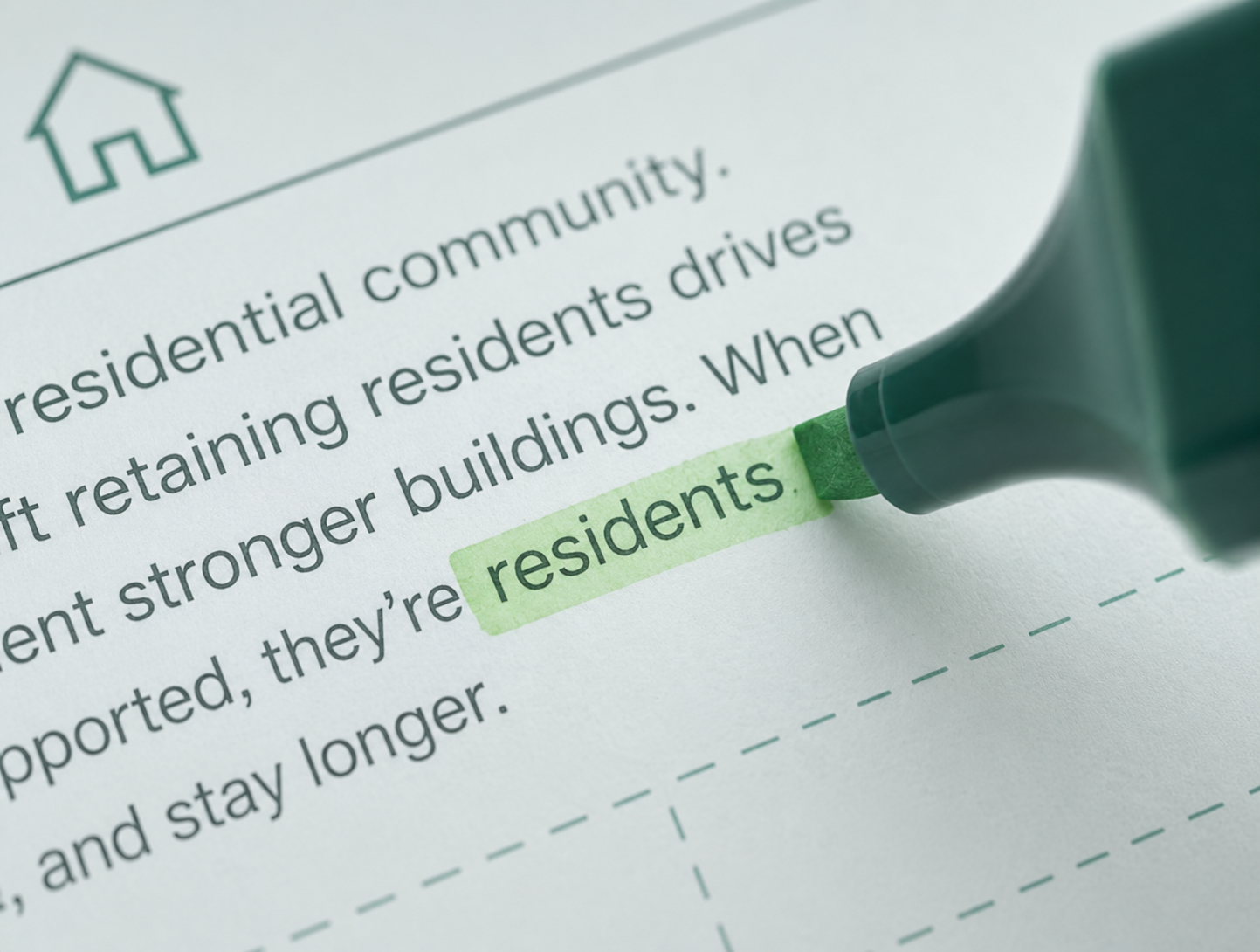
Residents aren't just tenants. They're your best retention strategy.
The property industry has spent years optimising for occupancy. Fill the unit, sign the lease, move on. And on a spreadsheet, that makes sense. Vacancy is expensive. Getting someone in the door is measurable. Keeping them happy is harder to quantify.
But here's what we've learned building Hococo: the landlords who are winning right now aren't just thinking about who moves in. They're thinking about why people stay - and what makes them leave.
The real cost of turnover
Tenant churn is one of the most underestimated costs in residential property. When a resident leaves, you don't just lose rent for the gap period. You lose the operational time to re-let, the marketing spend, the cleaning and maintenance between tenancies, and the admin load of onboarding someone new.
Put together, the true cost of a single move-out and move-in can easily run to several months' rent. Multiply that across a portfolio and you have a number that most landlords have never actually calculated - but would probably find alarming.
Retention isn't a soft metric. It's a financial one.
Why people leave
We've talked to hundreds of property managers and thousands of residents. The reasons people leave are remarkably consistent. Rent increases are the obvious one - but they're not always the deciding factor. People absorb rent increases when they feel good about where they live.
What actually pushes people out is the accumulation of small frustrations: a maintenance issue that took three weeks to resolve. A question that got ignored. A feeling that the building is managed by people who don't really care.
On the flip side, residents who feel informed, heard, and part of a community are dramatically more likely to renew. They're also more likely to tolerate the things that inevitably go wrong - because they trust the people managing their home.
What engagement actually looks like
Engagement in property isn't about running events or sending newsletters nobody reads. It's much more basic than that.
It's about responding to a maintenance request within a day, not a week. It's about communicating proactively when something is broken or delayed, rather than waiting for residents to chase. It's about giving residents the ability to help themselves - check a document, submit a request, reach a neighbour - without having to call or email.
When we look at the data from Hococo properties, the buildings with the highest resident satisfaction scores share a few things in common:
• Fast response times on enquiries - typically under 24 hours
• Proactive communication about building issues and planned maintenance
• Self-service tools that residents actually use
• Some form of community connection - neighbours knowing neighbours
None of this is complicated. But it requires a system that makes it easy to deliver consistently.
Community as a retention tool
This is the one that surprises people most. When residents feel a sense of community in their building, they're less likely to leave. It sounds almost too simple. But the research is clear, and our data backs it up.
Community doesn't require events or common spaces (though those help). It starts with connection - being able to ask a neighbour something, seeing that other people share your building, having a sense that where you live is more than just a unit number.
Some of the most engaged Hococo buildings are ones where residents are having conversations with each other through the platform - not prompted by the property manager, just organically. That sense of belonging is one of the hardest things to build. But when it exists, it sticks.
What this means for how you manage
If retention is a financial priority - and the numbers suggest it should be - then the way you think about property management has to shift. You're not just managing buildings. You're managing the experience of living in them.
That means investing in communication infrastructure. It means giving your team the tools to respond quickly and consistently. It means thinking about what residents actually need - not just what the lease obligates you to provide.
The landlords doing this well aren't spending more money. They're spending their existing resources more intentionally - on the things that build trust, not just on the things that fill units.
The difference between a 70% renewal rate and a 90% renewal rate is enormous. And it's entirely achievable. You just have to decide that keeping residents happy is part of the strategy, not just the nice-to-have.

.webp)