Active ownership requires your data to follow you
Something has shifted in the real estate industry. Slowly, but clearly.
More and more owners no longer want to hand over the keys to external providers (such as property management and facility management) and hope for the best. They want to be closer. They want to understand their portfolio. They want to make decisions based on data.
We call it active ownership. And it is becoming the norm. Not the exception.
But here is the problem: the infrastructure has not kept up.
The fragmented reality
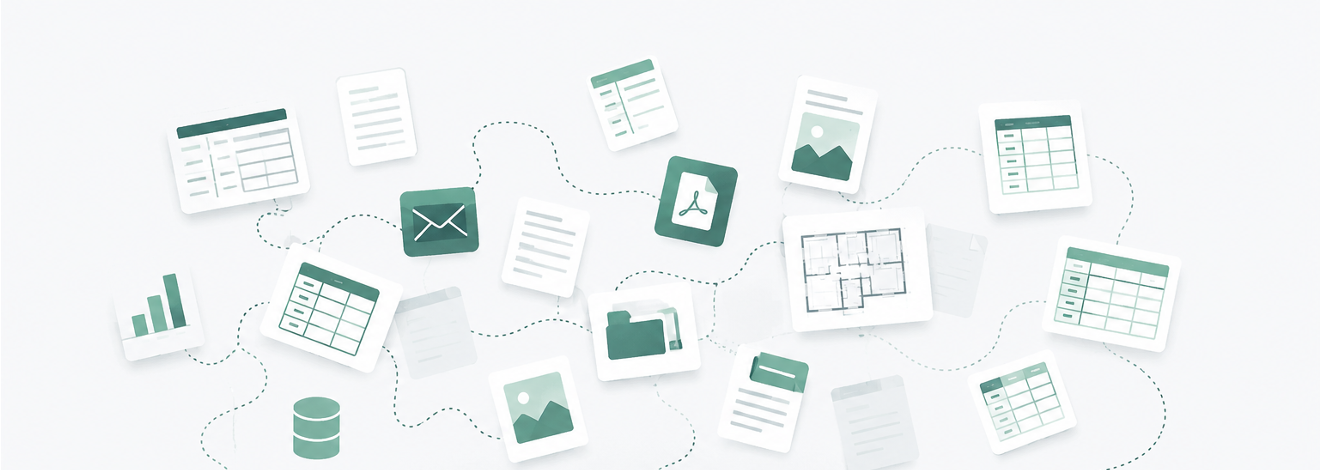
Most property owners we talk to live in a world that is split in every direction. Facility management and property administration are outsourced. The owner is left with scattered data, fragmented overviews and a feeling of not really being in control of what they actually own.
This is not a human problem. It is a structural one.
When operations are organised this way, it is almost impossible to consolidate data. What does it cost to run building A compared to building B? What is the average response time on maintenance tasks? How many unresolved requests are there right now? Simple questions, but for many owners they remain genuinely unanswered.
Residents feel it too
The fragmentation is not just an internal problem. It reaches all the way to the people living in the properties.
When facility management and administration are split across two separate providers with two separate systems, residents rarely know who to contact. Is it an administration question? A technical issue? Who actually owns the answer? The result is delays, duplicate requests and an experience where nobody really takes responsibility.
This is not what anyone wants to offer. But it is what the structure produces when no one has a unified system tying it all together.
The real problem: data that gets lost
Here is the part we talk too little about.
We operate in an industry where provider changes are frequent. That is the reality. Management companies get replaced. Service providers are terminated. Contracts expire. And when they do, the owner risks losing something far more valuable than a vendor. They risk losing the data.
Property data. Maintenance history. Tenant contracts. Communication logs. All the knowledge built up over years disappears into a system the owner never really owned.
This is an economic problem. It is an operational problem. And in an era where data is the foundation for informed decisions, it is also a strategic problem.
Ownership is not just about bricks
This is where we see a shift in mindset among the most forward thinking owners. They understand that ownership is not just about owning the buildings. It is about owning the data, the overview and the relationship with residents. Regardless of which providers have come and gone along the way.
This is precisely why we built Hococo as the owner's platform. Not the vendors'.
The idea is simple: the owner gets their own platform. A place where property data, resident communication, tasks and overviews are gathered. Vendors, whether facility management, administration or other service providers, connect to it. They work into the owner's system. Not the other way around.
When a vendor is replaced, they leave. The data stays. The overview stays. The relationship with residents stays.
Active ownership requires the right foundation
It is not enough to want to be closer to your portfolio. You also need the infrastructure for it.
Active ownership requires data that is available in real time. It requires communication that goes directly to residents, without passing through an intermediary. It requires systems built to survive vendor changes, not to fall apart when they happen.
The owners who invest in that foundation now will position themselves far better, both operationally and strategically. Not just because they get a better overview today, but because they are building value in their portfolio that does not depend on whether the right person sits in the right management company.
This is the kind of ownership the industry is moving towards. And it is what we are here to support.

.webp)